
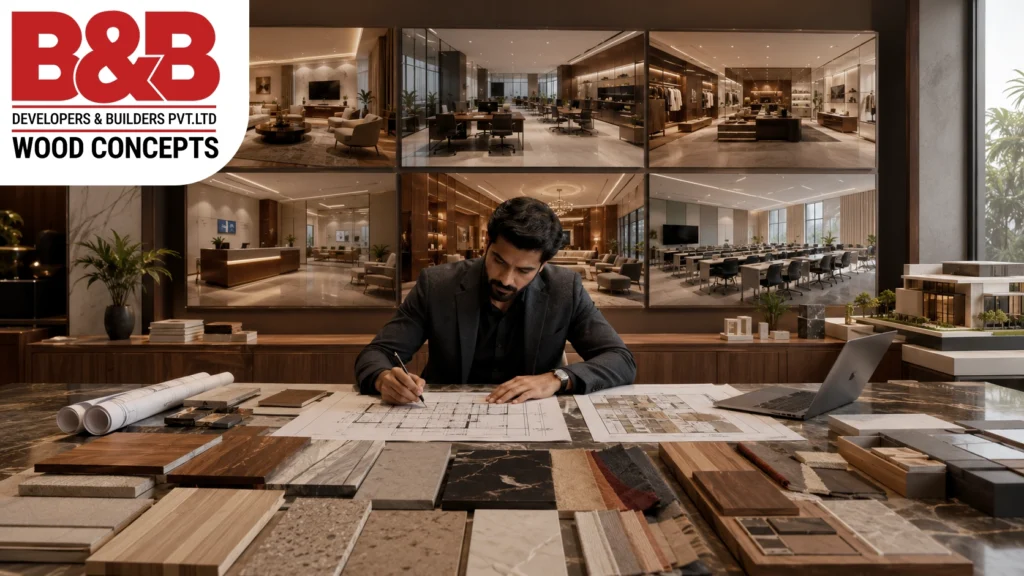
Choosing the right interior design company comes down to five factors: relevant experience for your specific type of space, whether they offer custom or only modular solutions, how well they coordinate interior and exterior design together, transparency about materials, and a clear process with realistic timelines. B&B Wood Concepts, based in Vellore, works across residential, commercial, corporate, hospital, hotel, and institutional projects with a focus on custom wood-based design — but the questions below apply regardless of which designer you eventually choose.
Whether you’re planning a home renovation, setting up a new office, or designing a healthcare, hospitality, or educational space, picking the right design partner has more impact on the final result than almost any other decision in the project. This guide breaks down what actually matters when comparing interior design companies, and how to avoid the most common mistakes homeowners and businesses make during this process.
Two designers can quote similar prices and still deliver very different outcomes. The difference usually comes down to experience with your specific type of space, how materials are sourced and used, and whether the design process actually accounts for how the space will be used day to day — not just how it will look in photos.
A mismatch here doesn’t just affect aesthetics. Poor planning shows up later as wasted storage, awkward layouts, furniture that doesn’t hold up to daily use, or a space that simply doesn’t function the way it needed to.
Residential, commercial, corporate, healthcare, hospitality, and institutional spaces all have different requirements. A designer who mostly does home interiors may not have the right experience for a hospital’s hygiene and workflow needs, or a hotel’s balance of aesthetics and durability. Ask directly about past projects in your category, not just their overall portfolio size.
Modular furniture is often faster and more standardized, while custom-built furniture — particularly in wood — is designed around your exact space dimensions and usage needs. If your space has unusual dimensions, specific storage requirements, or you simply want something that isn’t generic, ask whether the designer offers true custom fabrication or works from a fixed catalogue.
For commercial, hospital, hotel, and institutional projects especially, having the same team handle both interior and exterior design keeps the visual language consistent — signage, facade, and entry points end up matching the interior rather than feeling disconnected. This matters less for a single residential room, but more for full-building projects.
A trustworthy designer explains what materials are being used and why — wood type, finish, durability expectations — rather than leaving this vague until the project is underway. This transparency also tends to correlate with how honestly they’ll communicate about timelines and costs later in the project.
Ask what the actual process looks like: site visit, concept design, material selection, execution, and handover. A designer who can walk you through this clearly, with realistic timeframes, is generally more reliable than one who gives vague answers about “it depends.”
| Space Type | What to Prioritize |
|---|---|
| Residential | Personalization, storage planning, custom furniture fit to family needs |
| Commercial (Retail/Showroom) | Customer flow, brand representation, durability under foot traffic |
| Corporate (Office) | Workflow efficiency, professional client-facing zones, employee comfort |
| Hospital/Healthcare | Hygiene-friendly materials, patient comfort, staff workflow |
| Hotel | Guest experience, durability under constant turnover, ambiance |
| Institution (School/College) | Long-term durability, safety, functional layouts for heavy daily use |
B&B Wood Concepts is an interior and exterior design studio based in Vellore, Tamil Nadu, built around custom wood craftsmanship. The team works across residential, commercial, corporate, hospital, hotel, and institution projects, offering both interior and exterior design under one team — which keeps design language consistent across a full building rather than treating the outside and inside as separate projects.
The firm’s core specialization is in custom wood design — furniture and fittings built to the specific dimensions and daily-use requirements of each space, rather than generic, catalogue-based setups.
1. How do I know if an interior designer has real experience with my type of project?
Ask to see specific past projects in your category — residential, commercial, healthcare, hospitality, or institutional — rather than relying on general portfolio impressions. A designer with direct experience in your space type will usually be able to speak specifically about the challenges unique to it.
2. Is custom furniture always better than modular?
Not always — modular can be faster and more cost-effective for standard spaces. Custom furniture is worth prioritizing when your space has unusual dimensions, specific storage needs, or when long-term durability matters more than upfront cost.
3. Why does it matter if a designer also does exterior design?
For full-building projects like offices, hospitals, hotels, or institutions, having one team handle both interior and exterior design keeps the visual identity consistent from the facade to the inside, avoiding a disconnected look between the two.
4. What questions should I ask about materials before hiring a designer?
Ask specifically what type of wood or materials will be used, what finish is planned, and how it holds up to your space’s expected daily use. A designer who answers this clearly and specifically is generally more transparent about the rest of the project too.
5. How long does a typical interior design project take?
Timelines vary significantly based on project size and scope — a single room takes far less time than a full commercial or institutional space. A reliable designer should be able to give you a realistic estimate after understanding your specific project, rather than a generic timeframe upfront.
6. Should I choose one designer for both my home and my business interiors?
It depends on their range of experience — some firms, like B&B Wood Concepts, work across both residential and commercial/institutional categories, which can be convenient if you have projects in both areas and want consistent quality and communication.
Choosing an interior design company is easier when you know which questions actually matter — experience with your space type, custom vs. modular capability, exterior coordination, material transparency, and process clarity. Whichever designer you choose, walking in with these questions will lead to a better outcome. To see how these principles apply across different project types, explore interior design, exterior design, or the homepage for a full overview of services.