
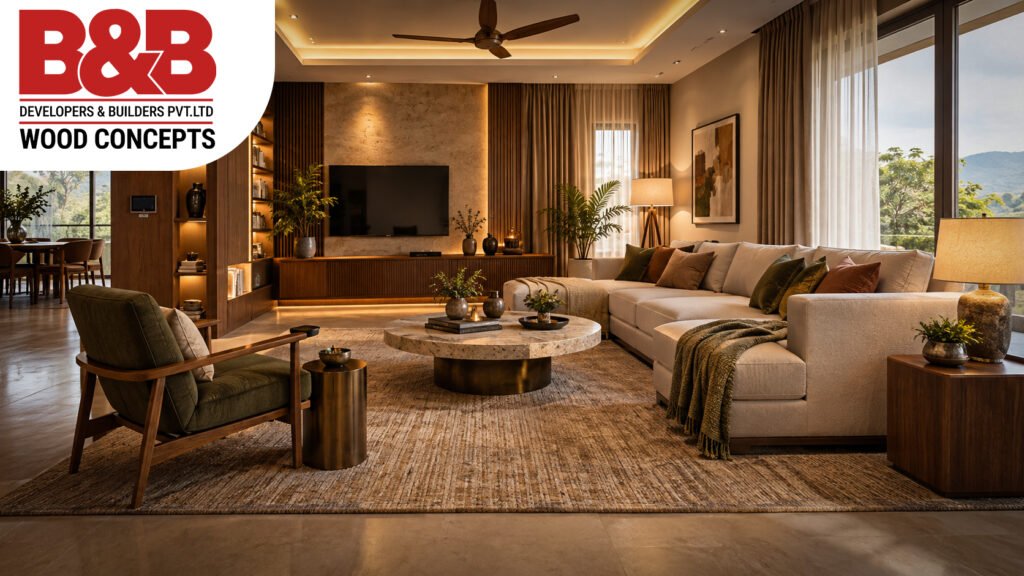
Every year brings a fresh wave of ideas in home design, but 2026 feels different. The shift isn’t about chasing the newest look — it’s about creating homes that feel personal, comfortable, and built to last. Whether you’re planning a full home renovation or just refreshing a single room, here’s what’s actually shaping interiors this year, along with some practical tips to make your space look polished rather than dated.
This year’s biggest shift is away from stark minimalism and toward warmth, comfort, and individuality. A few directions standing out in 2026:
The common thread across all of these: homes are being designed to feel lived-in and personal, not just photograph-ready.
If you’re planning a home refresh around these trends, our Luxury Interior Design and Residential Interior Design Services in Vellore can help you bring these ideas into your own space.
If you’re aiming for a premium look without a premium price tag, color choice matters more than most people expect. Neutral and earthy tones — warm greige, soft taupe, charcoal, and deep green or navy — consistently read as more expensive than bright, saturated colors.
The real secret isn’t the specific shade, though — it’s consistency. A home that sticks to a limited, well-coordinated palette throughout feels far more polished than one with too many competing colors from room to room. If you want a quick upgrade, start by unifying your wall colors and trim across connected spaces before adding any bold accents.
A few common habits quietly undercut an otherwise nice interior:
Most of these come down to scale and restraint — fixing them doesn’t require a big budget, just a more intentional eye.
Looking beyond 2026, interior design is heading toward three clear priorities: sustainability, personalization, and quiet technology. Materials that last and age well are being valued over trend-driven pieces that need replacing every few years. Spaces are increasingly designed to adapt as a household’s needs change, rather than being built around a single fixed use.
Wellbeing is also becoming a central design consideration — rooms are being planned around how they make people feel day to day, not just how they photograph. Expect this focus on comfort, adaptability, and thoughtful material choices to keep shaping homes well beyond this year.
If you’re interested in interior design as a career or even just as a serious hobby, there are a few solid paths:
Combining structured learning with real project exposure is usually the fastest way to build practical skill — theory alone only gets you so far in a field that’s ultimately about solving real spatial problems.
2026’s interior design trends point toward homes that feel warmer, more personal, and built with intention — not just styled for the moment. Whether you’re planning a full renovation or a few targeted updates, the fundamentals stay the same: thoughtful color choices, proper scale, and materials that last.
If you’re ready to bring any of these trends into your own home or workspace, get in touch with our team for a free consultation — or explore our full range of services to see where to start.
2026 home trends focus on warmth, comfort, and personalization over strict minimalism. Key directions include earthy, nature-inspired color palettes, layered lighting, flexible multi-purpose rooms, mixed textures like wood and metal, and smart technology that works quietly in the background rather than standing out.
Neutral and earthy tones — such as warm greige, soft taupe, charcoal, and deep green or navy — tend to make a house look more expensive than bright, saturated colors. Consistency across rooms matters more than the exact shade chosen.
Common culprits include mismatched furniture styles, cluttered surfaces, low-quality or shiny fabrics, harsh single-source overhead lighting, and undersized rugs or curtains that don’t fit the room’s scale.
The future of interior design is moving toward sustainability, personalization, and technology that integrates quietly into a space. Homes are increasingly designed to adapt to changing needs over time, with a growing focus on materials that last and spaces planned around wellbeing.
You can learn interior design through formal diploma or degree programs, online courses covering space planning and color theory, hands-on experience assisting a designer, and by learning design software such as AutoCAD or SketchUp.